- Email: nanbei2@nanbei-china.com


Portable dissolved oxygen meters are primarily used to measure dissolved oxygen concentrations in applications such as water quality monitoring, wastewater treatment, aquaculture, environmental testing, and industrial process control; they serve as essential tools for rapid on-site analysis.
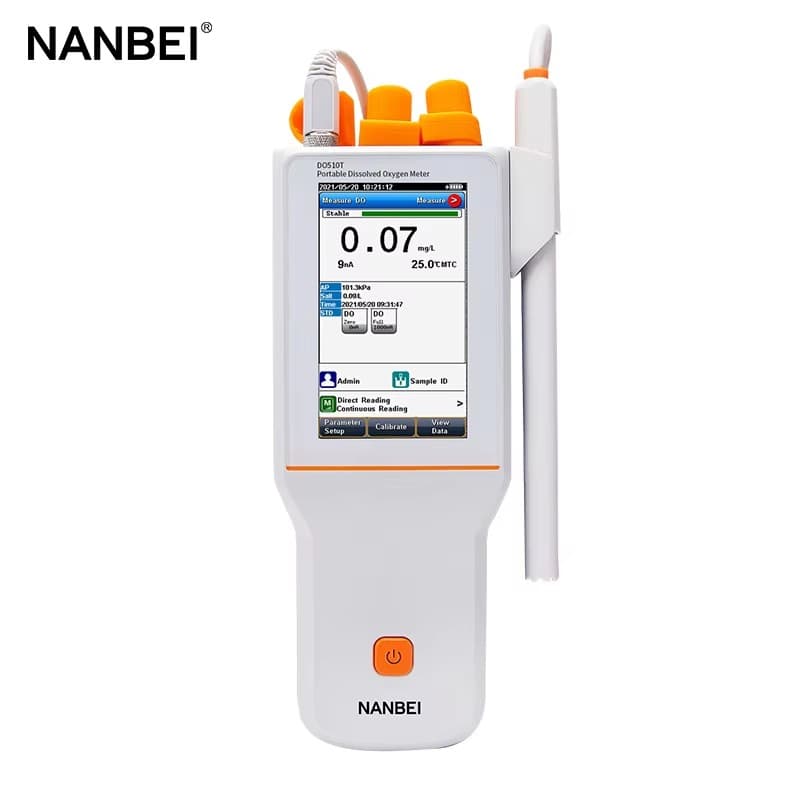
Most dissolved oxygen (DO) meters exhibit a generally linear relationship between oxygen concentration and signal output; therefore, a two-point calibration method is typically employed:
I. Calibrate the zero point using an oxygen-free aqueous solution.
II. Calibrate using an oxygen-supersaturated aqueous solution to verify whether the instrument’s reading matches the theoretical oxygen saturation value at the current temperature. The procedure is as follows:
1. Prepare an oxygen-free solution by dissolving a substance (such as sodium sulfite) in water to achieve a 5% mass concentration (prepare immediately before use). Insert the DO meter probe into the solution and move it slowly; once the reading stabilizes, check if it is close to zero. If it is, the zero-point calibration is accurate.
2. Prepare an oxygen-supersaturated solution by aerating clean water through a microporous diffuser for 15 minutes, then stopping the aeration. Insert the DO meter probe into the solution and move it slowly. Once the reading stabilizes, record it, measure the current water temperature, and compare the reading against a standard table of dissolved oxygen concentrations in water.
3. Note: After completing step 1, ensure the probe is thoroughly cleaned to avoid negative measurement errors.
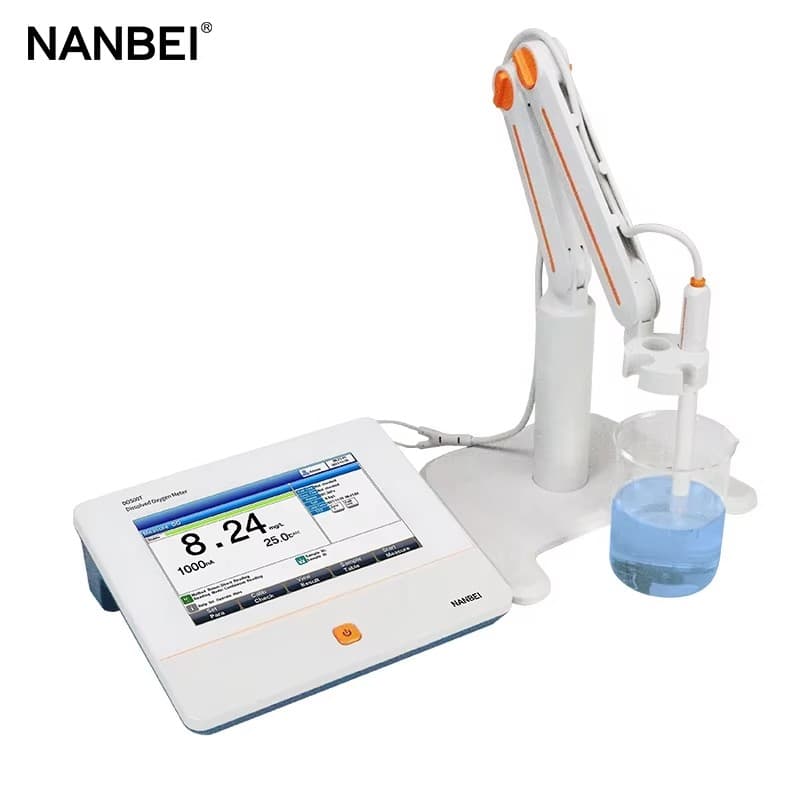
Bridge China Intelligent Manufacturing and Global Scientific Research, To Be a Contributor to the Global Technology Ecosystem
NANBEI INSTRUMENT distills laboratory instrument technical solutions developed for diverse applications into globally referenced benchmarks and best practices based on international standards.