- Email: nanbei2@nanbei-china.com


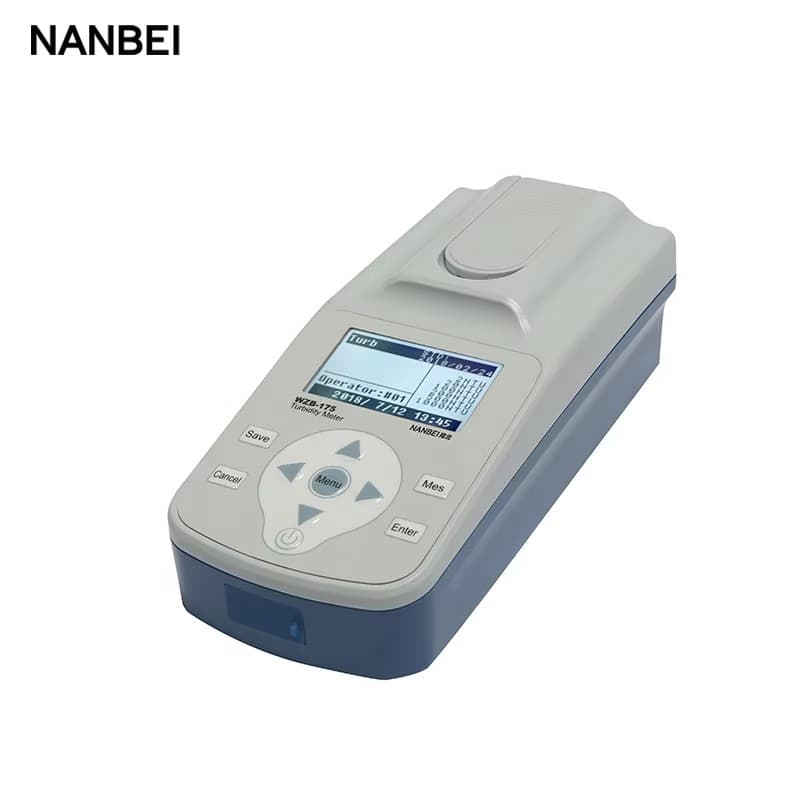
The turbidity meter is an instrument used to measure the extent to which suspended particles in a liquid scatter or absorb light. It is widely used in industries such as water quality monitoring, drinking water treatment, wastewater treatment, food and beverage, and pharmaceuticals.

During routine use, malfunctions or errors may arise due to prolonged improper operation or other factors. Poor reproducibility in turbidimeter readings is one such common issue.
1. Causes:
Aside from defects in the sample cell itself, poor reproducibility can stem from two other possibilities: variations in the placement position of the sample cell or significant inconsistencies in the volume of liquid used in the cell.
2. Solutions:
To avoid this issue during measurement, users should ensure the sample cell is positioned accurately and maintain a consistent liquid level within the cell.

Bridge China Intelligent Manufacturing and Global Scientific Research, To Be a Contributor to the Global Technology Ecosystem
NANBEI INSTRUMENT distills laboratory instrument technical solutions developed for diverse applications into globally referenced benchmarks and best practices based on international standards.