- Email: nanbei2@nanbei-china.com


The conductivity meter is an instrument used to measure the conductivity of a solution. It can be used in water quality monitoring, environmental monitoring, laboratory analysis, and other fields. Conductivity meters are classified into four types based on their application: pen-type, portable, benchtop, and industrial. Conductivity meters can be used to monitor the content of dissolved salts, ions, minerals, etc., in water to assess the water quality.
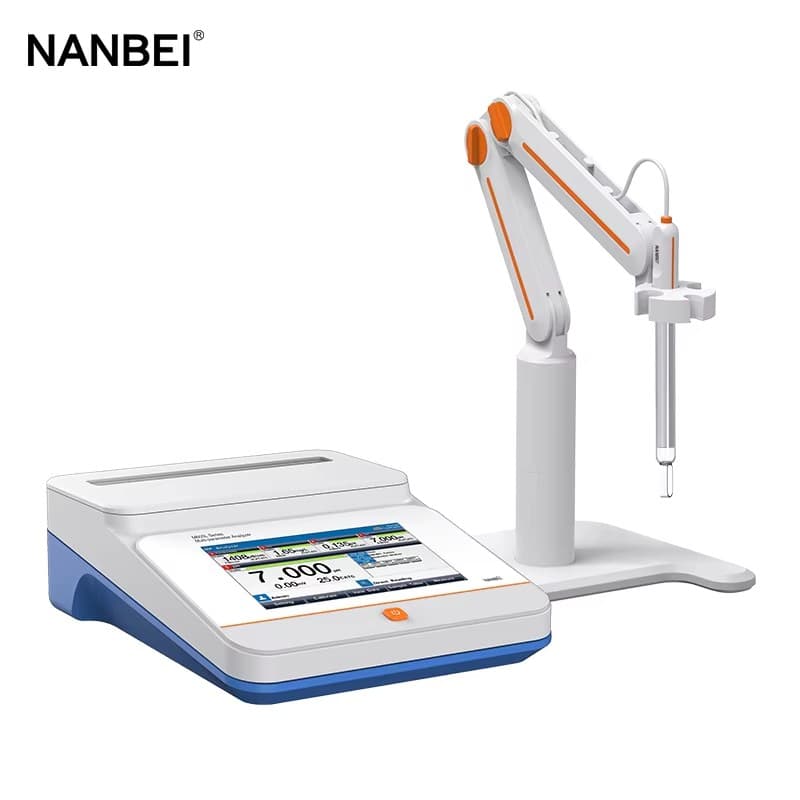
Water conductivity meters are available in accuracy classes of 0.5, 1.0, 1.5, and 2.0, each corresponding to different reference errors. The appropriate accuracy can be selected based on specific testing requirements.
The temperature of the solution and its temperature coefficient of conductivity have a significant impact on conductivity. Conventional conductivity meters are fixed-temperature-coefficient compensated instruments and cannot meet the testing needs of all types of solutions. Therefore, for laboratories measuring a wide variety of solutions with high accuracy requirements, a conductivity meter with adjustable temperature coefficient compensation should be selected, as it has a wider range of applications and higher measurement accuracy.
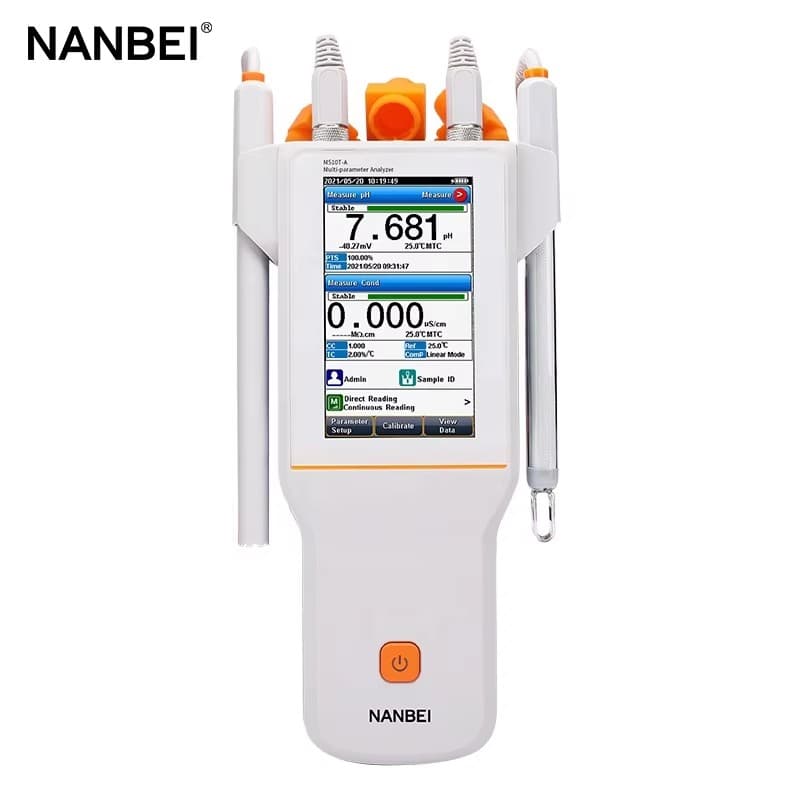
Efficient Laboratory Technology Solutions, Your One-Stop Lab Resource
NANBEI INSTRUMENT specializes in professional laboratory instrument configurations designed for research efficiency and rapid response to experimental needs, with over 20 years of experience in technical solutions.