- Email: nanbei2@nanbei-china.com


The conductivity meter is an analytical instrument used to quantitatively detect the concentration of ions in a solution. By measuring the electrical conductivity of the solution, it indirectly reflects the content of electrolytes in the solution. It is a basic testing device in laboratories, industrial production, environmental monitoring and other fields.
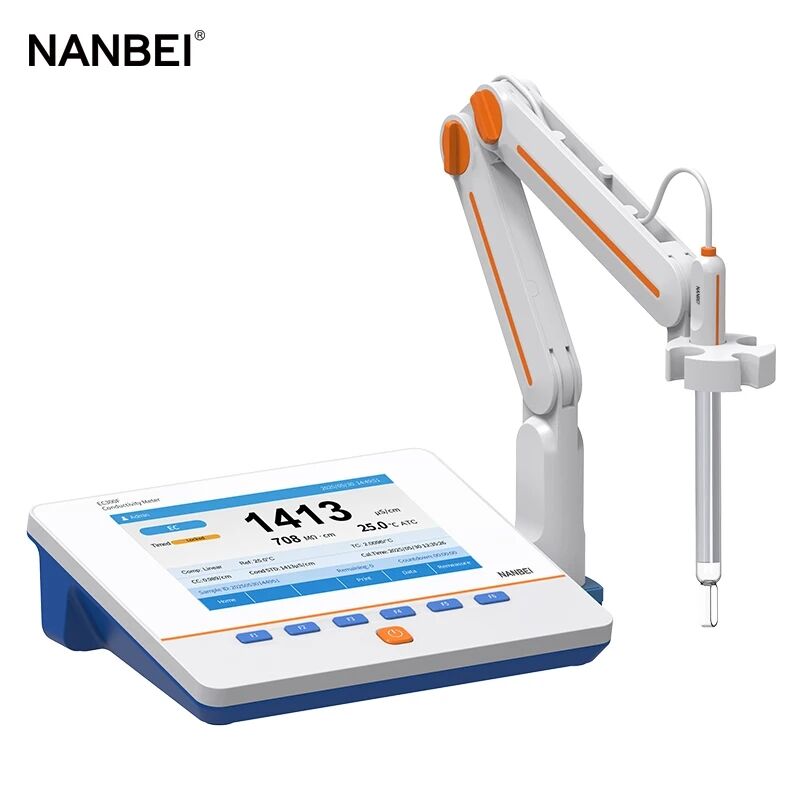
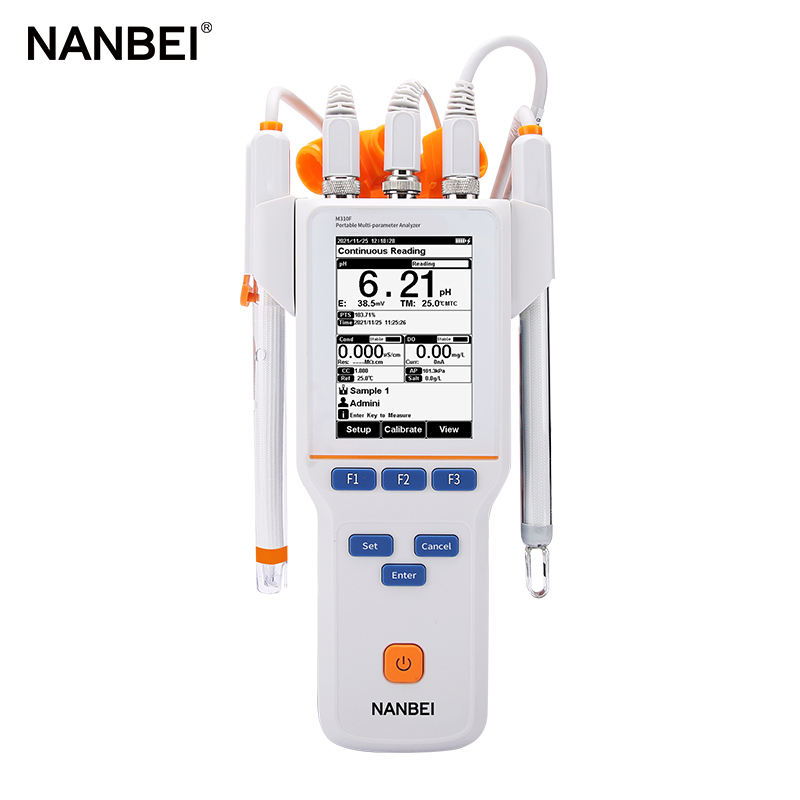
Conductivity meters are generally categorized into pen-type conductivity meter, portable conductivity meter, benchtop conductivity meter, and online conductivity meter. The key to choosing a conductivity meter lies in its core functions:
1. Basic Testing:
Measuring the conductivity and temperature of a solution (some models support automatic temperature compensation);
2. Extended Parameters:
Some high-end models can simultaneously measure TDS (total dissolved solids), salinity, and resistivity (e.g., pure water testing);
3. Intelligent Assistance:
Automatic calibration, data storage/export, and multi-range adaptation.
Instruments as the Future-Shaping Core Engine|Advance Scientific Exploration to New Frontiers
The precision of high-end instruments means an infinite approach to scientific truth. NANBEI INSTRUMENT strictly controls every step of the manufacturing process, achieving a production pass rate over 99.5%.